Idle Zombie Miner: Gold Tycoon
- 4.1
- Rating
- 10.00M
- Installs
- Free
- Price

 Analysis by App-foxy
I spent time with Idle Zombie Miner: Gold Tycoon as a casual simulation game, and its appeal became clearest when I treated it as a shared household distraction rather than a game that demands a long, uninterrupted session. One person can open it for a few minutes, improve the mining operation, and put the phone down; someone else using the same device can then continue from the current game state. That makes it easy to fit around cooking, commuting, waiting rooms, or the small gaps in a busy day.
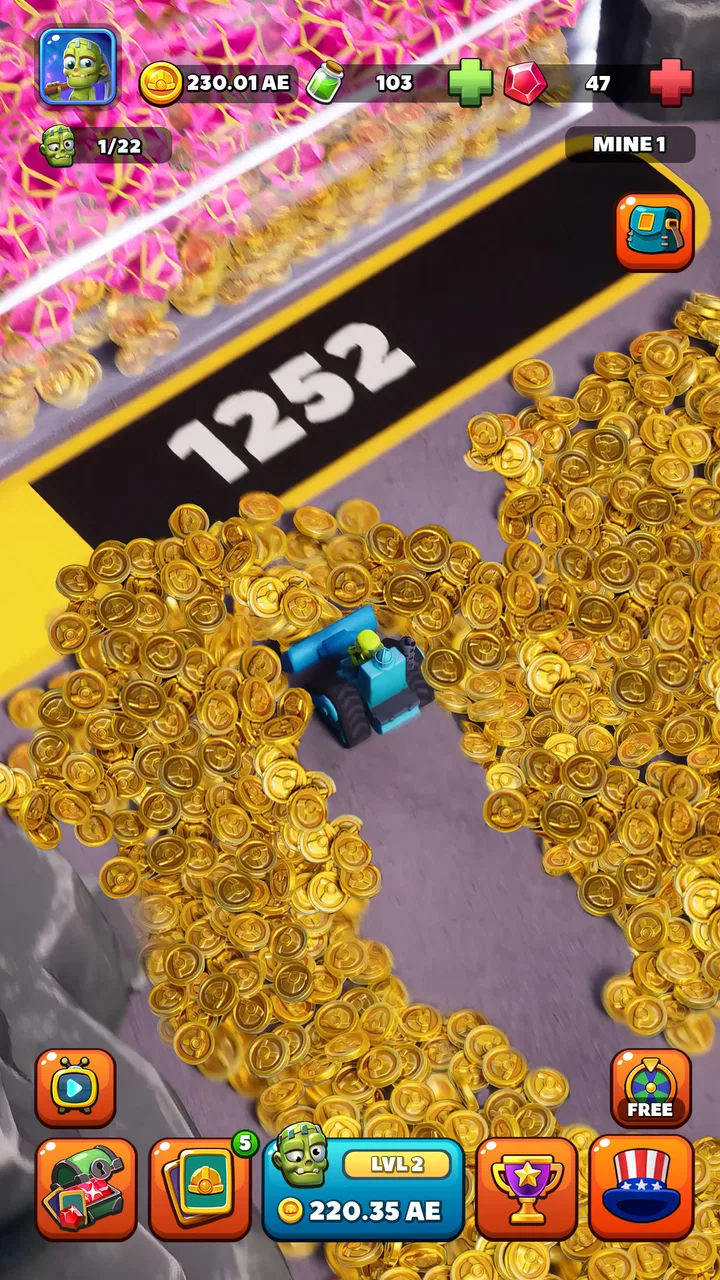
The central idea is simple: zombies work through a mining-themed progression loop while the player builds toward becoming a gold tycoon. It combines merging, mining, and idle advancement, so the game is less about precise controls and more about deciding where the next improvement should go. I found that simplicity welcoming, especially when I wanted something light, but it also means the experience depends heavily on whether you enjoy repeating small upgrades over time.
How Idle Zombie Miner works in everyday play
I find the everyday appeal of Idle Zombie Miner comes from how little preparation each visit needs: I can check the mine, decide whether to make a change, and stop without turning a spare moment into a commitment. That makes it easier to judge whether its pace suits my routine than a game built around long missions. The key is noticing what the loop asks of me before deciding what kind of reward feels worthwhile.
You May Also Like

 Blood Strike: 2.5 Anniversary
Blood Strike’s Loadouts Turn Every Drop Into a Tactical Gamble
A close look at Blood Strike’s custom loadouts: how fast access to signature weapons reshapes its battle royale rhythm, rewards preparation, and narrows the gap between fights.

 Pandora - Music & Podcasts
Pandora’s Music Is Easy to Start, but Harder to Recover
Pandora’s strength is its low-effort path from a seed to a station. Its weak spot is how much confidence it asks you to place in connection, setup, and quiet recovery.

 8 Ball Pool
 Is Built on Rivalries, Rematches, and Routine
A close look at the rivalries, rematches, shared routines, and unanswered safety questions that turn a quick pool match into a persistent mobile community.

 Samsung Music
’s Quiet Strength Is Playing What You Already Own
Its reach comes less from spectacle than from dependable access to a personal library. That simplicity is both the app’s strongest retention engine and its ceiling.

 AccuWeather: Weather Radar
AccuWeather Review: A Quick, Clear Forecast for Everyday Decisions
For everyday plans, the best forecast is the one you can understand quickly. AccuWeather makes rain timing, radar, and local conditions easy to act on, with a few trade-offs.

 Hill Climb Racing
Why Hill Climb Racing Still Turns Crashes Into One More Run
A tiny car, a bumpy hill and one more upgrade: Hill Climb Racing keeps resurfacing because its simple chaos makes every near-miss feel personal.
More From Our News Desk



A good fit for short shared-device sessions
On a household phone or tablet, the game works best when everyone understands that it is a single casual activity rather than a private profile system. I could imagine one person checking the mine in the morning, another opening it during a break, and the first player returning later to see what had accumulated. That rhythm suits an idle game naturally, because progress does not require constant attention in the same way a traditional action game does.
The useful household rule is straightforward: agree on who is allowed to spend accumulated resources and who is only checking progress. Merging or upgrading too quickly can change the direction of a run, so a child tapping through the screen or a second user experimenting freely may affect what the next player sees. The game itself is easy to understand, but shared use still benefits from a little coordination.
I would not treat it like a competitive family game with separate turns. Its design is better suited to cooperation around one evolving save state, assuming the people using the device are comfortable sharing decisions. If two players want independent progress, separate devices or separate game arrangements would be more appropriate than expecting this one experience to provide clear boundaries.
What the first sessions feel like
The opening loop is approachable because the objective is immediately readable: collect resources, merge or improve what is available, and push the mining operation forward. There is no need to learn a complicated control scheme before making progress. That makes it accessible to someone who normally avoids strategy games, while still giving a more experienced idle-game player familiar decisions to make.
My main advice is not to tap every available option automatically. In a merge-and-mine game, the attractive move is often the one that produces an immediate visible improvement, but saving resources for a more meaningful upgrade can create a smoother next session. I found it more satisfying when I paused to look at the whole board and considered whether an upgrade would improve the current bottleneck or merely make the screen look busier.
This is one of the less obvious strengths of the game: it rewards a small amount of restraint. The store description makes the concept sound like a straightforward clicker, but the better experience comes from treating each session as a short planning exercise. That does not turn it into a deep management simulator, yet it gives the repeated actions more purpose.
Boundaries that matter before handing over the device
The game is free to download and play, but it includes optional in-app purchases ranging from $0.99 to $99.99 per item. That range matters in a shared-device setting. Before letting a child or another household member use the game, I would make sure the device’s purchase authentication is configured in a way that matches the owner’s expectations. This is a practical precaution for any free game with optional spending, and it is especially important when several people use one account or device.
I would also establish a simple rule about watching advertisements or accepting prompts before tapping. I am not adding a claim about a particular advertising system; the useful point is that casual games often present several ways to accelerate progress, and a shared user may interpret a prompt differently from the person who installed the game. A child may see an attractive shortcut, while an adult may prefer the slower free route.
There is another boundary worth setting: do not assume that uninstalling and reinstalling will preserve progress. I would avoid making any reset or storage decision casually, particularly on a shared device. If the game has become a regular household pastime, the person who manages the device should be the one deciding whether it stays installed and whether any account-level action is safe.
Coordinating progress without turning it into a chore
Coordination works best when it stays informal. A quick message such as “leave the resources for the next upgrade” is enough to prevent most frustration. I would not create a detailed schedule unless several people are genuinely invested, because the game is designed for relaxed check-ins rather than formal team management.
A useful routine is to give each player a different role. One person can focus on collecting and checking idle progress, while another can decide when to merge or spend. This creates a little shared strategy without pretending that the game has built-in household profiles or collaboration tools. The arrangement is only a household habit, not a feature supplied by the game.
That distinction matters because the experience is fundamentally personal and progression-based. If one user spends everything during a quick visit, the next user may have fewer options and may not understand why. For that reason, I would recommend one shared rule: before closing the game, leave a short note or tell the next player what was changed. It sounds minor, but it prevents the most common shared-device complaint—returning to a game that feels unexpectedly different.
Age context and trust
The game carries an Everyone content rating, which fits its light zombie theme and non-serious presentation. I would still use ordinary parental judgment, especially with younger children who may react differently to cartoon-style monsters or repeated game prompts. An age label can help with a first decision, but it does not replace knowing how a particular child responds to the theme or to optional purchases.
For older children and adults, the bigger issue is spending awareness rather than the mining premise. The game is easy enough to pass around, and that accessibility is useful, but it also makes it easy for someone unfamiliar with mobile games to tap through a purchase-related screen without understanding the consequence. Trust here should mean more than trusting the player not to cheat; it should include trusting them to recognize which actions change the shared experience or involve money.
I would be comfortable recommending it for a family that already has clear device rules. I would be more cautious in a household where children regularly borrow an unlocked phone and make independent decisions inside free-to-play games. The game is not automatically unsuitable in that situation, but the device owner should set the boundaries first rather than relying on the game to provide them.
Where the simulation loop succeeds
The strongest part of Idle Zombie Miner is its low-pressure structure. I could open it without needing to remember a complicated story, a long quest chain, or a precise sequence of controls. The combination of idle progress and merging gives each visit a recognizable purpose: inspect what has changed, make a few improvements, and decide whether to continue or leave it running in the background of the day.
That makes it a better choice than a more demanding management game for someone who wants a gentle routine. It is also more engaging than a purely passive clicker because merging introduces a visible decision. Even when the decision is small, it gives the player something to do beyond repeatedly collecting a reward.
The zombie-mining theme gives the loop its personality. Without that setting, the mechanics could feel like a plain resource counter. Here, the fantasy of building a gold operation staffed by zombies makes the repeated upgrades easier to follow. I would not call the theme especially deep, but it is specific enough to give the progression a playful identity.
Where the loop can become repetitive
The same simplicity that makes the game approachable can also limit its longevity. If you need a simulation with complex production chains, detailed layouts, or a large number of meaningful strategic variables, this is unlikely to satisfy you. The decisions are compact and the main pleasure comes from steady improvement, not from solving a difficult economic puzzle.
I also noticed that idle-game momentum can make the player feel as though progress is being measured by waiting. That is enjoyable when I want a background activity, but less satisfying when I am looking for a session with a clear beginning and ending. After a few short visits, I could understand why some players would settle into a routine while others would lose interest once the novelty of merging and mining faded.
Compared with a conventional city-builder or tycoon simulator, this game is lighter, faster to understand, and easier to share casually, but it offers less control over the larger economy. Compared with a pure clicker, it gives me more visual interaction through merging and mining, although it still relies on the familiar cycle of collecting, upgrading, and returning later. The right alternative depends on whether you value accessibility or depth.
Practical advice for better sessions
My first tip is to decide what the current bottleneck is before spending. If the operation seems slow, do not assume that every available improvement addresses the same problem. Look at what the game is asking you to do next and spend with that goal in mind. This prevents the common idle-game habit of using currency simply because it is available.
My second tip is to separate “checking” sessions from “progress” sessions. A checking session means collecting what is ready and leaving the game alone. A progress session means actively merging and deciding on upgrades. Keeping those purposes separate makes the game feel less like an endless stream of taps and helps shared users understand whether the board was intentionally changed.
My third tip is to avoid judging the game by a single long sitting. Its design makes more sense across repeated short visits. If you play continuously and expect constant new decisions, the loop may feel thin. If you use it as a small daily break, the gradual growth is more likely to feel rewarding.
There is also a useful trade-off around optional spending. Paying may make advancement feel quicker, but the free structure is better appreciated when you accept that progress is meant to be gradual. I would only consider a purchase after deciding that the game has earned a regular place in my routine, not because a temporary slowdown makes the next upgrade feel urgent.
Device fit, version, and everyday accessibility
The game comes from Royal Ark and is available as a free simulation title. It has reached over 10 million installs, with a 4.0 average from around 185 thousand ratings and roughly 6.9 thousand written reviews. Those figures suggest that it has found a broad audience, but they do not change my more practical conclusion: popularity is less important than whether you enjoy idle progression and repeated resource decisions.
It was released on September 21, 2023, and the current version is 2.404. The minimum operating-system requirement is Android 7.1, which makes it accessible on many older Android devices. I would still judge performance on the actual shared phone or tablet, especially if storage is tight or the device already struggles with games. A low minimum requirement does not guarantee identical smoothness on every model.
The Everyone rating makes it easier to consider for a mixed-age household, while the free entry price removes the need to commit money before trying the basic loop. The important qualification is the optional purchase range, so I would pair installation with sensible device-level purchase controls. That combination—easy access plus clear spending boundaries—is the safest way to make it a shared casual game.
Who should play it, and who should skip it
I would recommend it to someone who likes idle games, simple tycoon themes, and progress that can be checked in small portions. It is particularly suitable for a player who wants a game that can survive interruptions. A parent waiting outside school, a commuter with a few spare minutes, or a household sharing a tablet can all find a reasonable use for it, provided everyone accepts that the progression belongs to one evolving game state.
I would also recommend it to newcomers who find traditional simulation games intimidating. The zombie-mining premise is easy to grasp, and the merge mechanic gives the player a visible action to perform. You do not need to master a complex interface to understand what the game wants from you.
I would skip it if your priority is a story-driven zombie adventure, a competitive multiplayer experience, or a detailed tycoon sandbox. It is not the right substitute for a game built around exploration, tactical combat, or deep financial planning. I would also skip it if you dislike waiting-based progression or feel pressured by optional purchase prompts in free-to-play games.
My household verdict
After using it as a casual simulation game, I see Idle Zombie Miner as a good shared-device option only when the household treats it as a cooperative, single-progress pastime. Its short sessions, readable objectives, and light theme make it easy to pass around. The most successful setup is one where users agree not to spend resources or money impulsively and understand that every change affects the next person’s session.
Its limitations are equally clear. The progression can become repetitive, the strategy remains relatively light, and players seeking independent profiles or a more substantial management system should choose another type of game. It is also not a title I would hand to a child without first checking the device’s purchase arrangements.
For me, the best reason to try it is not the promise of becoming a tycoon, but the way its small mining-and-merging loop fits into ordinary life. I can open it, make one sensible decision, and leave without feeling that I have missed an important story moment. If you want a relaxed game for brief check-ins and can accept gradual progress, it is worth trying; if you want depth, independence between players, or a finish line, look elsewhere.
FAQs for Idle Zombie Miner: Gold Tycoon
01What is the main objective of Idle Zombie Miner: Gold Tycoon?
Idle Zombie Miner: Gold Tycoon is a strategy and simulation game where players manage a team of zombie miners to extract gold. The primary goal is to expand your mining operations, optimize resource management, and increase profits to build a gold empire. The gameplay focuses on idle mechanics, allowing progress even when offline.
02How does the idle mechanic work in Idle Zombie Miner: Gold Tycoon?
The idle mechanic in Idle Zombie Miner: Gold Tycoon allows players to earn gold and resources even when they are not actively playing the game. Your team of zombie miners continues to work in the background, ensuring a steady accumulation of wealth. This feature is ideal for players who enjoy gradual progression without constant interaction.
03Are there in-app purchases in Idle Zombie Miner: Gold Tycoon?
Yes, Idle Zombie Miner: Gold Tycoon offers in-app purchases that can enhance your gameplay experience. Players can buy premium currency to speed up progress, unlock special items, or purchase upgrades. However, these purchases are optional, and the game can still be enjoyed fully without spending real money.
04What are the system requirements for Idle Zombie Miner: Gold Tycoon?
Idle Zombie Miner: Gold Tycoon is designed to run on both Android and iOS devices. For Android, it generally requires version 5.0 and up, while iOS users need version 10.0 or later. The game is optimized for mobile devices, ensuring smooth performance across most modern smartphones and tablets.
05Can I play Idle Zombie Miner: Gold Tycoon offline?
Yes, Idle Zombie Miner: Gold Tycoon can be played offline. This feature allows you to continue enjoying the game without an internet connection, making it perfect for on-the-go entertainment. However, some features, such as in-app purchases and certain updates, will require an internet connection.
Pros
- Engaging idle gameplay mechanics.
- Smooth and intuitive user interface.
- Frequent updates with new content.
- Minimal ads for uninterrupted play.
- Offline play available.
Cons
- Repetitive tasks may tire some players.
- In-app purchases can be pricey.
- Graphics are not highly detailed.
- Limited storyline progression.
- Requires frequent resource management.

Idle Zombie Miner: Gold Tycoon
Gallery